 Duluth Water Leak Detection Pros
Gwinnett Water Bill Leak Adjustment: What It Is, and What It Is Not
A Gwinnett County water bill leak adjustment in Duluth, GA, in ZIP codes 30096 and 30097, is a request to review a high bill caused by a leak — not a guaranteed credit, and not a service this business provides.
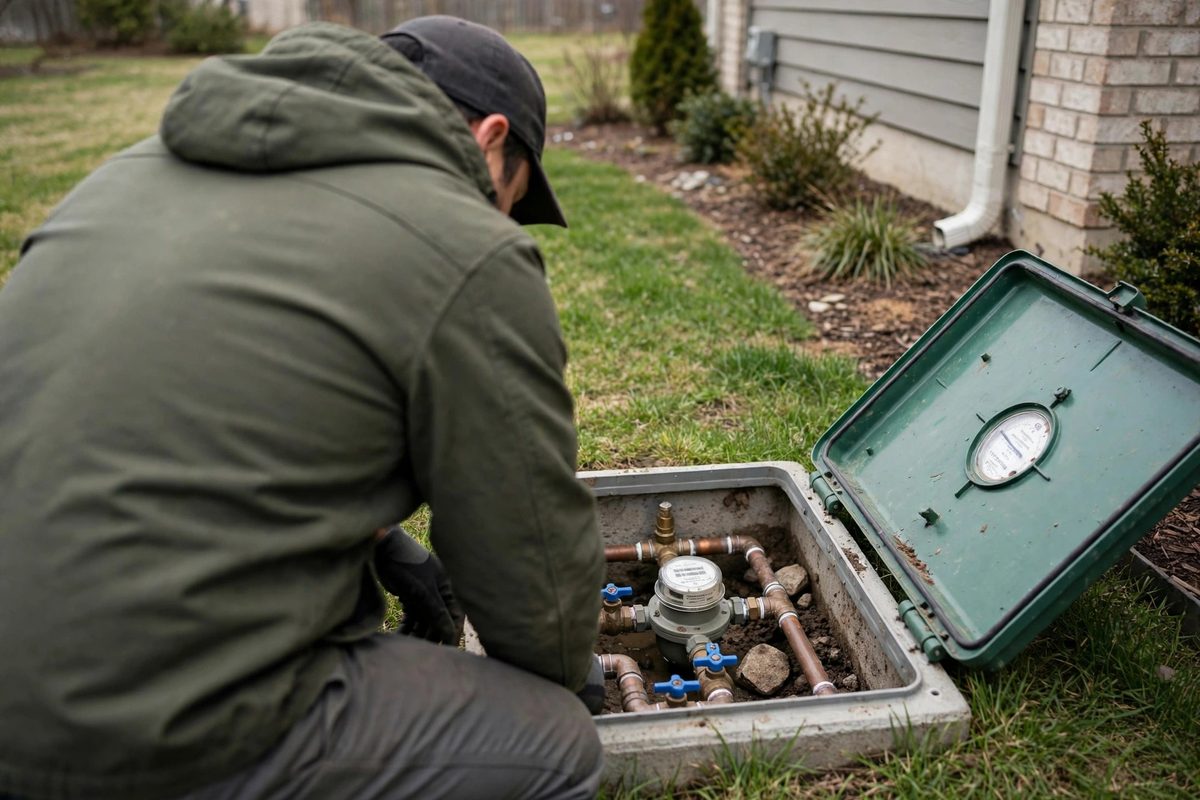
A high water bill is often how a hidden leak is first noticed, and the next question is usually whether the bill can be adjusted. The honest answer is: sometimes, under the provider's rules, with evidence — and never guaranteed. This guide explains the shape of that process in general terms. It is not a promise of a credit, it is not a filing service, and the only authority on your bill is Gwinnett County Water Resources, whose rules and forms control.
One caution first: do not delay finding and fixing a leak while waiting for an adjustment decision. An adjustment, where granted, usually covers a period and a portion, not the whole bill and not an ongoing leak. Finding the leak promptly is both the right repair step and the evidence that helps any adjustment request — a leak that was left running while a form was filed tells a different story from one that was found and fixed quickly.
What a leak adjustment usually involves
- High bill noticed. A bill spike, often with a meter that moves, points to a leak. Note the billing period and the meter readings.
- Leak found and fixed. Detection narrows the point, repair fixes it, and the repair record is kept. The repair record is part of the evidence.
- Request filed. A request to the provider, with the billing period, the repair record, and any detection report, asking for a review under the provider's leak adjustment rules.
- Provider decides. The provider applies its own rules — eligibility, time limits, how much is adjusted, and whether the adjustment is a credit or a rate change — and decides.
Each step has its own rules, and those rules vary. Some providers limit adjustments to one per period, some require repair within a time window, some adjust only the usage above a threshold. None of those specifics are claimed here, because they are the provider's rules, not this site's, and they can change. Confirm them with Gwinnett County Water Resources directly, in writing, before relying on them.
What evidence helps
Evidence that helps is the same evidence that helps any leak question: dated meter readings, the detection report with its ruled-out list and marked point, the repair record with dates, and the billing periods before, during, and after the leak. A complete file shows that a leak existed, that it was found and fixed promptly, and that usage returned to normal afterwards. That pattern — spike, fix, return to normal — is what an adjustment review is looking for, and it is worth assembling before filing.
What does not help is a claim without a repair, a leak left running, or a bill spike with no leak found. An adjustment is a review of a leak that was fixed, not a discount for high usage in general, and a request without a repair record is unlikely to succeed. That is another reason to find and fix the leak first, and file second.
What to confirm with Gwinnett County Water Resources
Confirm, in writing, five things before filing: whether a leak adjustment exists for your account type, what time limit applies after the leak is fixed, what evidence is required, how much of a bill can be adjusted and how the adjustment is applied, and whether an adjustment can be requested more than once. Those five answers, from the provider, are the only ones that count — and they should be kept with the billing file, not relied on from memory or from a guide.
Gwinnett County Water Resources is already linked on this site as the local water authority, and it is the right first contact for billing questions. Detection and repair are this business's work; billing decisions are the provider's, and the two should not be confused.
Water bill leak adjustment in Duluth, GA
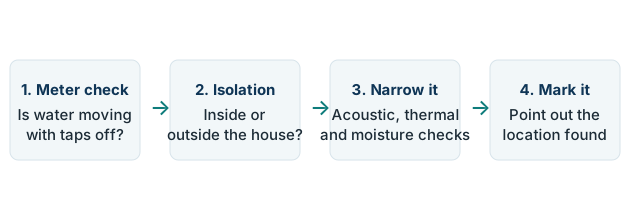
For a Duluth home with a high bill, the practical sequence is: meter test, detect and fix the leak promptly, assemble the file (meter readings, detection report, repair record, billing periods), confirm the provider's rules in writing, then file. No credit is guaranteed, no filing service is claimed here, and the leak itself comes first — because a fixed leak is both the repair and the evidence. The meter guide is how to check your water meter, and the detection process is on the how detection works page.
If the bill spike was not a leak
Not every bill spike is a leak, and that possibility should be checked before any adjustment request, because an adjustment request for a non-leak spike is unlikely to succeed. Other causes of a high bill include a toilet that runs continuously, an irrigation system that runs longer than intended, a meter reading error, and a change in household usage — more occupants, a new appliance, a filled pool. Each one has a different check, and each one should be ruled out before a leak is assumed.
A running toilet is the most common non-leak cause, and it is worth checking first: a toilet that refills silently, or that can be heard running when it should be still, can use a large volume over a billing period without any visible water. Irrigation is the next check: a system that runs on a schedule, especially after a schedule change or a seasonal adjustment, can account for a spike that looks like a leak. Meter error is rarer, but it is a provider question, not a detection question — and it is worth raising with the provider directly if the meter readings do not match usage.
If no leak is found and no other cause explains the spike, the next step is the provider, not another inspection. Ask the provider to verify the meter and the billing period, and keep the detection report showing no leak found — that report is evidence that a leak was checked for and ruled out, which is useful for the billing discussion even when it does not lead to an adjustment. A clean detection report is not a failed visit; it is a ruled-out cause, and ruled-out causes narrow the remaining questions.
How a high bill is read, step by step
Reading a high bill step by step is worth doing before any other step, because a bill spike has several possible explanations and the bill itself contains clues. Compare the billing period with previous periods, in usage rather than in dollars, because rates change and usage is the comparable figure. Check whether the spike is in one period or sustained across several — a single-period spike points to a single event, while a sustained rise points to an ongoing leak or a usage change. Check the meter readings on the bill against your own readings, where you have them, and note any estimated readings, which are not actual usage and can create an apparent spike that is not real.
That reading exercise also helps the provider conversation, because it shows you have done the groundwork. A caller who can say “usage rose in this period, fell after this repair, and has stayed normal since” is giving the provider the pattern it needs to apply its rules. A caller who can only say “my bill is high” is asking the provider to do the reading for them, and the provider's answer will be slower and less favourable. Do the reading first, assemble the file second, and file third — in that order, every time.
Common questions
Will Gwinnett County adjust my water bill for a leak?
Sometimes, under the provider's rules, with evidence — and never guaranteed. An adjustment is a review of a high bill caused by a leak that was found and fixed, not a discount for high usage in general. Confirm eligibility, time limits, and required evidence with Gwinnett County Water Resources directly, in writing.
Should I wait for an adjustment decision before fixing the leak?
No. Finding and fixing the leak promptly is both the right repair step and the evidence that helps any adjustment request. A leak left running while a form is filed tells a different story from one that was found and fixed quickly, and an adjustment usually covers a period, not an ongoing leak.
What evidence should I keep for an adjustment request?
Dated meter readings, the detection report with its ruled-out list and marked point, the repair record with dates, and the billing periods before, during, and after the leak. That pattern — spike, fix, return to normal — is what an adjustment review is looking for.
Does this business file leak adjustments for me?
No. Detection and repair are this business's work; billing decisions are the provider's. This guide explains the shape of the process in general terms, but filing is between you and Gwinnett County Water Resources, under its rules.
What if my adjustment request is denied?
Then the bill stands under the provider's rules, and the repair still stands as well — the leak was found and fixed, which is the primary value. If you believe the decision was wrong, the provider's own review or appeal route, if one exists, is the next step, not a detection claim.