 Duluth Water Leak Detection Pros
What to Do First When Water Is Showing in Your Duluth Home
Water showing in a Duluth home, in ZIP codes 30096 and 30097, needs the same first steps: stop the water if it is safe to reach, stay clear of wet electrics, note the meter and timing, then call. Do not open a wall or ceiling to search.
Water showing where it should not be is frightening, and the instinct is to act fast. Most of the damage from a leak, though, comes not from the first hour but from the wrong first moves: opening a wall to search, painting over a stain, or waiting a week to see if it dries. The steps below are ordered the way they help most, and they all fit before any trade arrives.
Stop the water if it is safe to reach
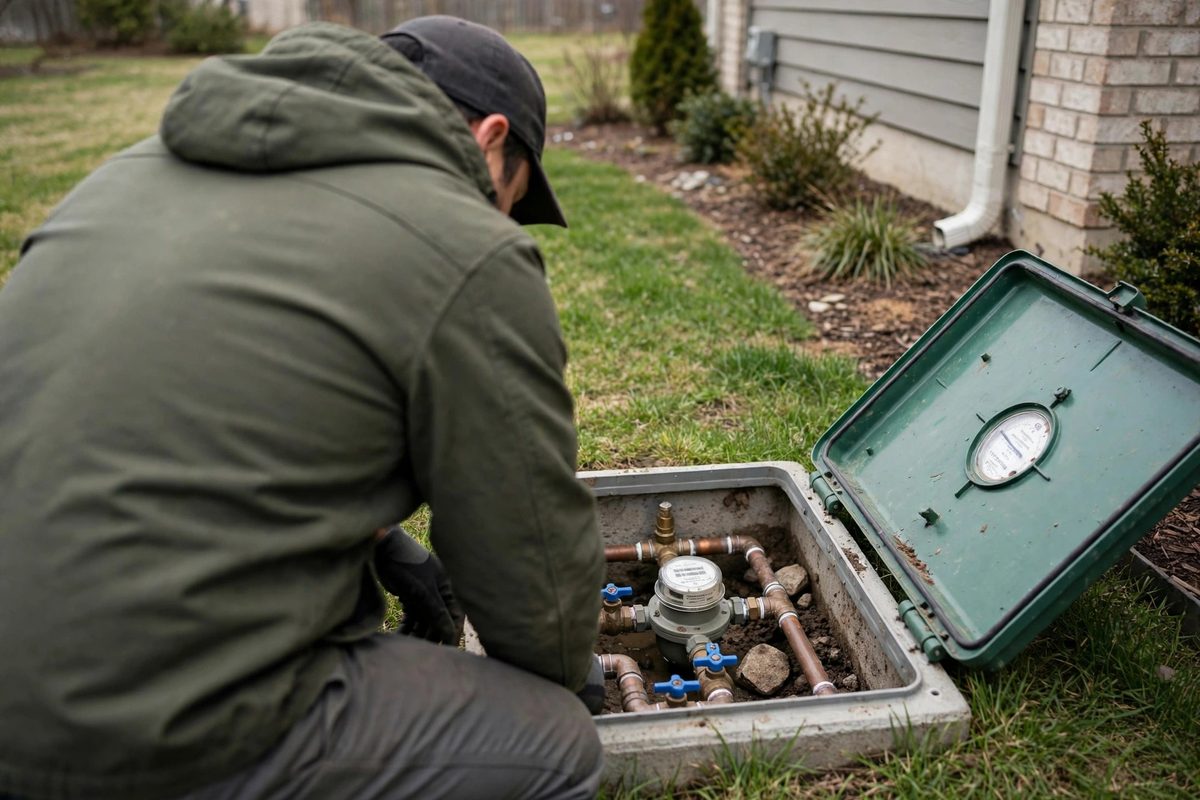
If water is spreading, shut off the main valve — but only if it is safe to reach without walking through standing water or touching wet electrics. A main valve is usually near the meter or where the water line enters the house. If you cannot reach it safely, skip this step and call: safety outranks water damage, and a professional can shut it off on arrival. Note whether the valve closed fully. A valve that does not close fully is itself useful information to pass on, because it affects how the inspection is done.
After shutting off, check whether the water stops. If it stops, the source is on the supply side of the valve. If it keeps coming, the source may be a drain, a roof entry, or water already held in materials, and that distinction matters for which trade is needed. Either way, do not turn the water back on to test it repeatedly — each cycle can spread water further.
Stay clear of wet electrics
Water and electricity together are the one part of this situation that is genuinely dangerous. Do not touch switches, outlets, or light fittings that are wet or near wet areas. Do not step into standing water if there is any chance it reaches an outlet. If a ceiling is sagging, stay out from under it: it can hold more water than it appears to, and it can come down without warning. If you smell gas, leave the house and call your gas utility or emergency services — that is not a plumbing call.
What to note before anything is moved
Before anything is dried, painted, or opened, note four things. They take two minutes and they make the inspection faster and more accurate.
- Where. The room, the wall or ceiling section, and whether the water is spreading or staying in one spot.
- When. When you first noticed it, and whether it grows after rain, after a shower or bath, after a toilet flush, or all the time.
- Meter. If it is safe to reach, read the meter with everything off, then read it again after a wait without using water. Movement points to a supply leak. The meter test guide explains the steps.
- Photos. Photograph the water, the stain, and the meter reading, with dates. Photos taken before anything is moved are the record an inspection, and any later discussion, will rely on.
Do not paint over a stain, do not open a wall or ceiling to look, and do not dry a ceiling section before it is photographed. All three hide the pattern the inspection needs: timing, position, and spread. Drying is for after the source is found, not before.
What to tell us when you call
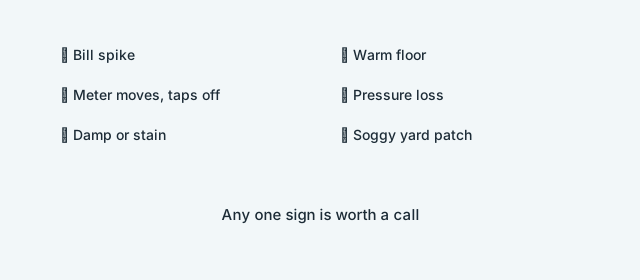
A call that starts with the four notes above gets further faster than a call that starts with a guess about the cause. Tell us where the water is, when it grows, what the meter did, and what is above or behind the wet section — an upstairs bathroom, a slab floor, an exterior wall. Tell us too if a ceiling is sagging, if the water is spreading, or if the main valve did not close fully. Those three details change the urgency of the visit, and they are worth stating first rather than last.
You do not need to know the cause before you call. Separating a plumbing leak from a roof leak, a drain leak, or condensation is the inspection's job, and it is done on site with the meter, isolation, and narrowing checks. Calling with an honest “I don't know, here is what I see” is more useful than calling with a confident guess that sends the wrong trade first.
What happens next
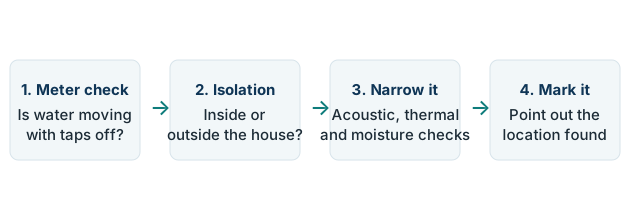
Detection comes first, and repair comes second. The inspection narrows the source with the meter test, section isolation where valves allow, acoustic listening, thermal imaging for hot-water lines, and moisture readings — and marks the point several checks agree on. Only that marked point is opened, and only after the location is discussed with you. If the checks do not agree, the result is stated as inconclusive rather than guessed, and no wall or ceiling is opened to search. The full sequence is on the how detection works page.
After detection, the repair discussion is separate: what needs opening, what materials are involved, and what the repair itself will involve. Detection and repair are priced separately, and no price is published here because no price has been supplied. Ask on the call what the inspection includes and what it will rule out as well as find, before any opening is authorised.
Keep everything you noted, in one place: the dated photos, the meter readings, and later the detection report. That file is useful twice over — first for the repair discussion, and second if an insurance question arises later, because it shows when the problem was noticed and acted on. A leak that is documented promptly tells a different story from one that was painted over and left, and the difference can matter well beyond the repair itself.
Water showing under a sink in Duluth, GA
Water under a sink is a different case from a hidden leak, and it is worth saying so. If the connection is visible and the pipe is accessible, a general plumber is the faster first call — detection is for concealed sources, not visible ones. The same first steps still apply: shut off if safe, keep clear of wet electrics, photograph, and note the timing. The difference is only in who is called first, and calling the right trade first saves a visit.
Water showing on a ceiling in Duluth, GA
Water on a ceiling needs the ceiling-specific cautions: stay out from under a sagging section, do not poke it, and note whether it grows after rain or after upstairs use. The dedicated service page is ceiling leak detection, and the stain guide is ceiling stain: plumbing, roof, or condensation. The first steps are the same — shut off if safe, electrics clear, notes and photos, then call — but the ceiling itself is treated as a hazard until it is checked.
Common questions
Should I shut off the water even if I am not sure it is a plumbing leak?
Yes, if it is safe to reach the main valve. Shutting off stops a supply leak from spreading while the cause is being worked out, and if the water keeps coming after shutoff, that itself tells the inspection the source may not be supply. If the valve is not safely reachable, skip it and call — safety outranks water damage.
How long can I wait before calling?
A small stain that is not spreading can wait for a scheduled visit, but a sagging ceiling, spreading water, or water near electrics should not wait. If you are unsure, call and describe what you see: the sag, the spread, and the meter result are the details that decide urgency, and they are worth stating first.
Should I dry the area before the inspection?
No, not before it is photographed and the pattern is noted. Drying hides timing and spread, which are the clues the inspection uses to narrow the source. Photograph first, note when it grows, and let the inspection read the pattern. Drying is for after the source is found.
Can I open the wall or ceiling myself to find the leak?
No. Walls and ceilings contain wiring and other services, and an unguided opening creates a larger repair without narrowing the leak. Water travels inside walls and along joists, so the wet spot is rarely the source. Detection narrows first, so only the marked point is opened.
What if the water turns out not to be a plumbing leak?
Then the inspection has still done useful work: it has ruled out a supply leak and pointed to the next question, whether that is a roof source, a drain issue, or condensation. That ruling-out is stated plainly rather than dressed up as a location, because a false location is worse than an honest referral to the right trade.