 Duluth Water Leak Detection Pros
Water Meter Leak Calculator for Duluth, GA
Enter two meter readings and the hours between them, and this calculator gives the flow in gallons per hour and per day. Then add your shutoff test result: meter stopped means an inside leak, meter still moving means a buried line.
The calculator
How to take the readings
Turn every tap, toilet, and appliance off, then read the meter and write the number down. Wait, with nothing using water, then read it again and write that number down too. Two hours is the check EPA WaterSense describes: if the meter does not read exactly the same after a period with no water use, you probably have a leak. Longer waits work as well, and the calculator accepts any hours figure. The full steps, including what to do about toilets and appliances first, are in the meter test guide.
How to read the result
A flow above zero means water escaped during the test window. The gallons-per-day figure is the rate for that window, and the 30-day figure is what the same rate would add up to if it never changed. It is not a forecast: leaks vary, and an intermittent leak may run only at certain times. A zero result means no water escaped while testing. It does not prove the home has no leak, only that nothing flowed during those hours, so a retest at another time is still worth doing if symptoms persist.
The shutoff result divides the search. Meter stopped when the house shutoff closed means the leak is inside the house. Meter kept moving means the leak is in the buried line outside. That pair of sentences is the whole isolation test, and it is the first thing to report on the call, because it decides whether the visit starts inside or outside.
Limits of this calculator
The calculator trusts the figures entered. Transposed digits, a misread dial, or a wrong unit will produce a wrong rate, so re-read before trusting a surprising result. Meters differ: some read in gallons, some in cubic feet, and the unit selector converts cubic feet at 7.48 gallons each. A running toilet or a faulty appliance can move a meter, so a positive result still needs those checks before it is called a pipe leak. And a single test window cannot catch a leak that only flows at other times. The calculator measures a window. It does not watch the home.

A worked example, three ways
The same calculator answers three different questions, depending on what the readings show. Work through all three before trusting a single result, because each one teaches a different part of reading the answer. All three examples use round numbers and are labelled as examples, not readings from a real home.
| Example | Readings and hours | Flow | What it means |
|---|---|---|---|
| A: steady leak | 100 to 124, 24 hours, gallons | 1.00 per hour, 24.0 per day | Water escaped steadily during the test; 720 gallons in 30 days if constant |
| B: cubic feet | 5,000 to 5,010, 48 hours, cubic feet | 1.56 per hour, 37.4 per day | 10 cubic feet is 74.8 gallons; the unit changes the arithmetic, not the leak |
| C: no movement | 50 to 50, 2 hours, gallons | 0 per hour, 0 per day | No water escaped during the test window; it does not rule out an intermittent leak |
Example A is the straightforward case: a full day of steady flow, easy to annualise, and a clear reason to call. Example B shows why the unit selector matters. Ten cubic feet looks like a small number, but at 7.48 gallons per cubic foot it is 74.8 gallons, and the daily rate is higher than Example A despite the smaller-looking difference. Example C is the one most often misread. Zero movement is good news for those two hours only. A leak that runs at other times, or only when a particular fixture is used, can hide through a short test and appear on a longer one.
Gallons or cubic feet: how to tell
Meters in the United States read in gallons or in cubic feet, and the calculator must know which, because the two differ by a factor of 7.48. The unit is usually printed on the meter face, near the dial or the register, and it is usually named on the bill as well, next to the volume figure. If the face says gallons, choose gallons. If it says cubic feet, often shortened to cu ft, choose cubic feet and let the calculator convert. If neither can be found, use the bill: the unit on the bill matches the unit the meter reports.
Guessing the unit is the easiest way to get a confident wrong answer. A cubic-feet reading treated as gallons understates the flow by more than seven times, which can turn a serious leak into a reassuring trickle on paper. A gallons reading treated as cubic feet overstates it by the same factor, which can turn a small flow into an alarming one. When in doubt, run the calculator both ways and compare, then confirm the unit from the meter face or the bill before acting on either result. The two answers bracket the truth, and the confirmed unit picks between them.
Meter-test mistakes that waste a visit
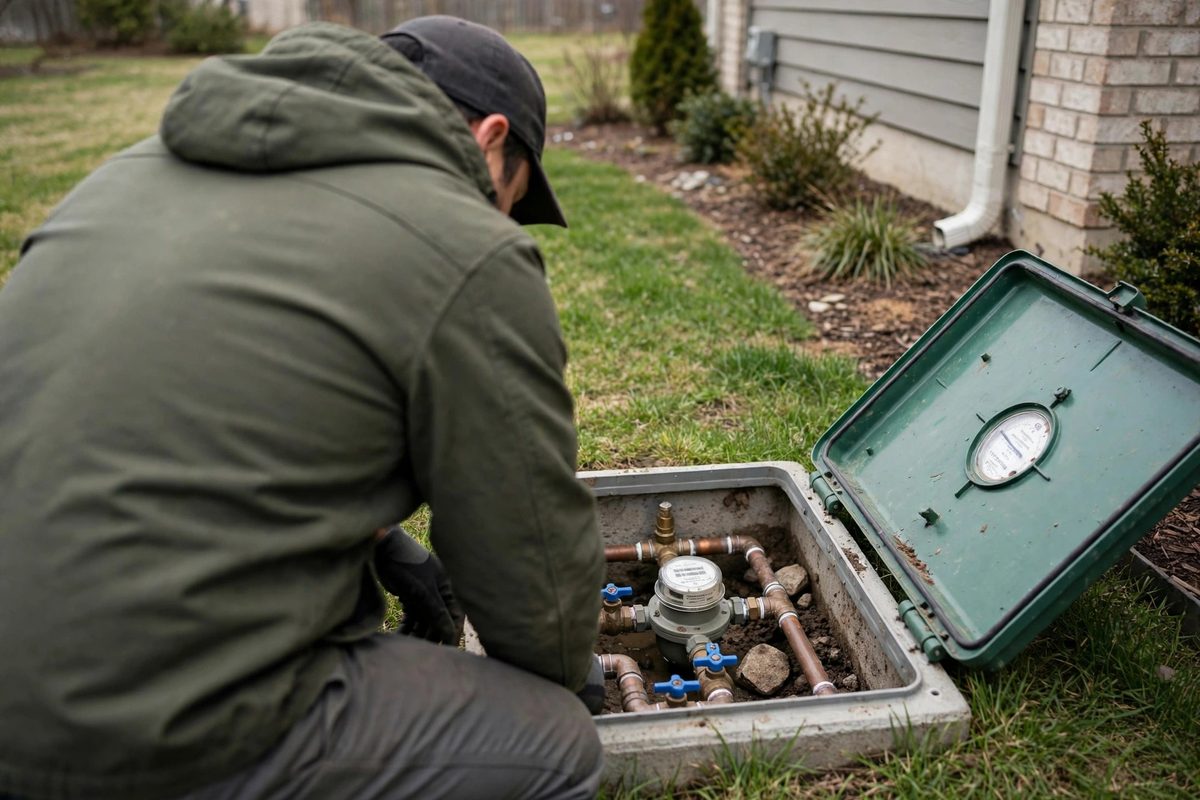
Four mistakes account for most useless meter tests. The first is leaving something running: a toilet refilling, an appliance mid-cycle, an irrigation zone on a timer, or a tap dripping. Any of them moves the meter, and the test then measures that use, not a leak. The second is a misread dial: digits transposed, or a dial read in the wrong direction. Writing both readings down, and reading them back before calculating, catches most of these. The third is too short a window for a slow leak. Two hours suits a clear leak, but a slow one may move the dial by less than a single digit in that time, so a longer window, such as overnight, gives a slow leak time to show.
The fourth mistake is testing at the wrong time: right after heavy use, when pipes and appliances are still settling, or during a period when use cannot truly be stopped. A test needs a genuinely quiet period, with everything off and staying off. If a quiet period cannot be arranged, the test result should be treated as provisional and the test repeated when one can be. A meter test done carefully once beats three hurried tests that contradict each other, because the visit can only build on a result that is trusted.
When the meter test is not enough
A meter test proves water escaped during a window. It does not locate the water, and there are cases where it cannot even prove escape. An intermittent leak may not run during any test window chosen, however careful the timing. A very quiet leak may move the dial by less than the meter can show over a short window. A leak with more than one source can confuse the picture, since the shutoff test may stop one flow while another continues elsewhere. In each case, the honest result is not a location but a limit, and the visit is where narrowing checks take over.
If the meter itself is suspected, because readings look impossible or the dial behaves erratically, that is a matter for the water provider, not for a leak inspection. Say so on the call, with the readings that raised the suspicion, rather than booking a visit around a meter that may be misreporting. In every other case, bring the readings, the hours, the unit, and the shutoff result to the call. Those four facts are the foundation the visit is built on, and a careful test is the cheapest, most useful thing a homeowner can do before it.
Common questions about checking a water meter for a leak
What if my meter reads in cubic feet?
Choose cubic feet in the unit selector. The calculator converts each cubic foot to 7.48 gallons before working out the flow, so the result is still in gallons per hour and gallons per day. If the unit is unknown, check the meter face or the bill, which usually names the unit, and re-run the calculator with the right setting rather than guessing.
What if the second reading is lower than the first?
Re-read both figures and check for transposed digits, since a meter in this test should not run backward. If the second reading is still lower, note both readings exactly as shown and call with them, rather than adjusting either figure. A lower second reading usually means a misread dial or a written-down digit, not water flowing backward through the meter.
Does a zero result mean there is no leak?
No. A zero result means no water escaped during the test window. A quiet leak, an intermittent leak, or a leak that only flows when a particular fixture or appliance runs may not flow during those hours. If symptoms persist, such as damp, sound, or a bill that stays high, retest at another time and call with both results, including the hours each test covered.
Do you need my readings to book a visit?
No. Readings help, because they turn a worry into a flow rate and a shutoff result, and they let the visit start in the right place. But a visit can be arranged without them. The call still starts with what is showing, which ZIP the home is in, and whether the meter test has been run, and the visit runs the meter test itself if it has not been done.