 Duluth Water Leak Detection Pros
How Much Water Does a Hidden Leak Waste in Duluth, GA?
According to EPA WaterSense, the average household's leaks waste more than 10,000 gallons of water a year. A hidden leak's share depends on its flow, which a meter test measures. The figure is a national average for all household leaks, not a promise for any one Duluth home.
The EPA figures, exactly as published
According to EPA WaterSense, the average household's leaks can account for more than 10,000 gallons of water wasted every year, or the amount of water needed to wash 270 loads of laundry. Household leaks waste more than 1 trillion gallons annually nationwide, equal to the annual household water use of more than 11 million homes. Ten percent of homes have leaks that waste 90 gallons or more per day. Fixing easily corrected household water leaks can save homeowners about 10 percent on their water bills. Those are EPA WaterSense figures, published on its Fix a Leak Week facts page, and they are national averages, not measurements from Duluth homes.
The national scale is the point of the figures. One household's leak looks small next to a trillion gallons, but the average is built from millions of small leaks running day and night. A leak that wastes a few gallons a day does not feel urgent, and that is exactly why it survives for months. The figures do not tell any one homeowner what their leak wastes. They explain why a leak that shows no water can still matter, and why a bill that creeps up deserves a meter test rather than a shrug.
What the figures cover, and what they do not
The EPA figures cover all household leaks, not hidden pipe leaks alone. Worn toilet flappers, dripping faucets, and leaking valves are the common examples EPA names, and all are easily correctable. A hidden slab leak or a buried line leak is part of the total, but it is not the whole total, and no part of the EPA figures splits hidden leaks out from visible ones. Applying the 10,000-gallon average directly to a hidden leak, as if it were measured for hidden leaks, would misread the source.
The drip equivalences need the same care. EPA notes that a faucet dripping once per second can waste more than 3,000 gallons a year, and a showerhead leaking at ten drips per minute wastes more than 500 gallons a year. Those are visible-drip figures. A hidden pipe leak does not drip at a tap, so drip maths does not set its rate. The equivalences are useful for one thing only: showing how a small, steady flow compounds over time, which is the same compounding that makes a hidden leak expensive in water long before it is visible as damp.
Why hidden leaks waste unnoticed
A visible drip announces itself. A hidden leak does not. Water escaping under a floor slab goes into the ground beneath the home. Water escaping from a buried line goes into the soil around it. Neither shows as a puddle, and neither makes a sound a homeowner would notice in daily life. The first sign is usually a bill with more gallons than expected, or damp that appears far from the leak after water has travelled along a slab, a wall base, or a pipe run.
Time is what turns a hidden leak from a curiosity into a large waste figure. A flow that would look trivial over an hour, left running for weeks or months, adds up to hundreds or thousands of gallons, because it never stops. Seasonal patterns add to the delay: a pipe cracked in a freeze may leak only on thaw, so the waste starts weeks after the cold night that caused it. The leak is not waiting to be noticed. It is running while the home looks normal.
How to measure your own leak
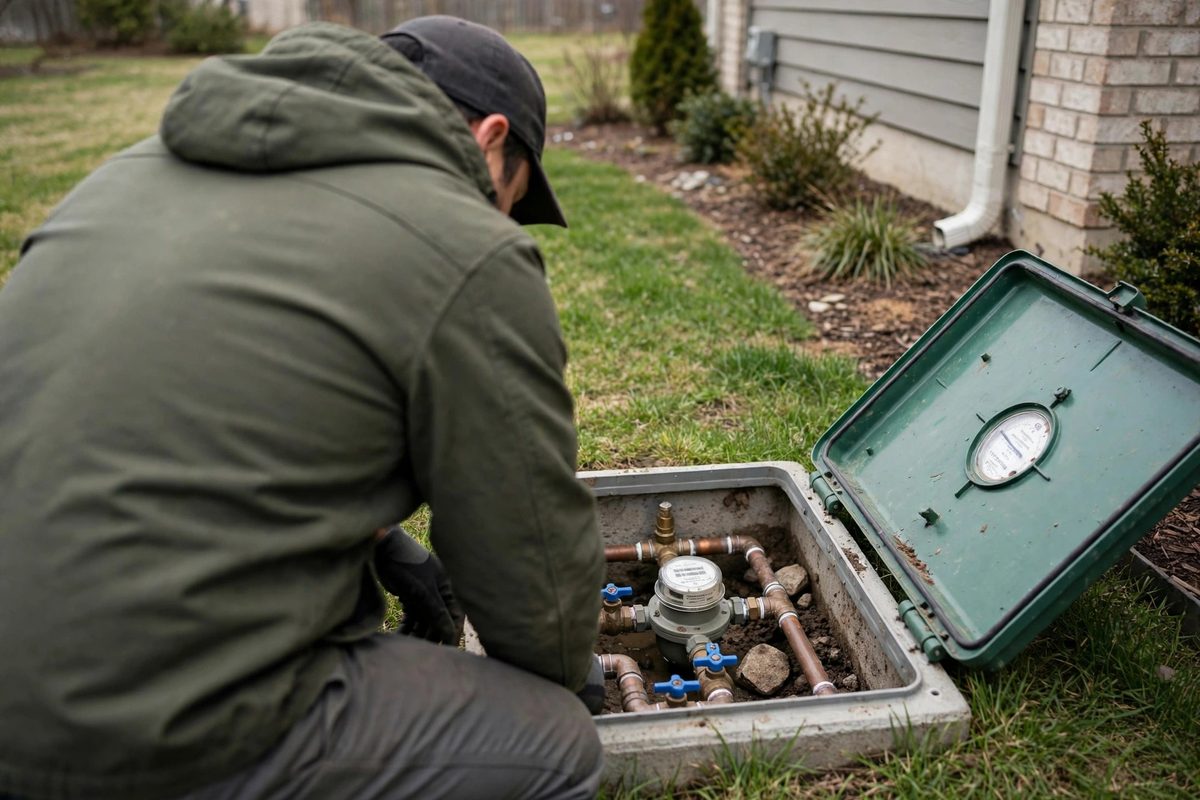
The meter test measures your leak, where national averages cannot. EPA's own method is simple: check the water meter before and after a two-hour period when no water is being used, and if the meter does not read exactly the same, you probably have a leak. EPA says probably, and that caution is honest, because a running toilet or an appliance can move a meter too. The test proves water escaped during the window. It does not name the pipe.
Two readings and the hours between them give a flow rate, and the free meter calculator on this site turns those figures into gallons per hour and per day. That rate belongs to the test window. A leak can run faster or slower at other times, and an intermittent leak may not run at all during the test, so the rate is a measurement, not a fixed daily figure forever. Even so, it replaces a national average with a number from the home itself, which is what a repair and billing discussion actually needs.


Bill volume versus bill dollars
When a bill rises, compare gallons, not dollars. Rates, fees, and charges change, and a higher amount due does not by itself mean more water was used. The water volume figure on the bill is the usage. Two bills compared by volume, divided by the days each covers, give gallons per day for each period, and the change in gallons per day is the real comparison. The free bill spike checker on this site does that arithmetic from the two volumes and the two day counts.
Two cautions belong with any bill comparison. First, an estimated reading can create a false spike that a later actual reading corrects, so check whether each bill was estimated or actual before concluding anything. Second, changes in use, such as extra occupants, new irrigation, or a filled pool, raise volume without any leak. The bill comparison raises the question. The meter test answers it.
What waste volume does not prove
Waste volume does not locate a leak. A large waste figure says water is escaping, not where it is escaping from, and a small waste figure does not mean a small problem, since damp can spread and damage far beyond the first stain even from a slow leak. Volume also does not size the opening: a long-running small flow wastes more than a short-running large one, so the gallons alone cannot tell a repairer how big the hole is or what the repair will involve.
The 10 percent bill-saving figure needs the same boundary. EPA ties it to easily corrected household leaks generally, such as dripping faucets and worn toilet flappers, not to hidden pipe leaks in any particular home. A hidden leak's saving after repair depends on its flow rate, the water rate, and how much of the bill the leak was driving. Anyone promising a fixed percentage saving for a hidden leak is promising what no average can deliver.
A worked example: from readings to gallons per day
Take an example with round numbers, not a real home. A meter in gallons reads 12,340, and 48 hours later, with no water used in between, it reads 12,364. The difference is 24 gallons over two days, which is 12 gallons per day. If that flow stayed constant for 30 days, it would add up to 360 gallons in a month. The arithmetic is simple on purpose: difference, divided by days, gives the daily rate, and the daily rate, multiplied by days, gives the projection. If the meter reads in cubic feet instead of gallons, each cubic foot is 7.48 gallons, and the free meter calculator on this site applies that conversion.
What does 12 gallons a day mean in context? It sits below EPA's figure of 90 gallons a day for the ten percent of homes with the largest leaks, but that comparison is for scale only, not a verdict. No threshold is published here for when a leak matters, and 360 gallons a month is still water escaping where it should not be, every day, whether or not damp has shown yet. A slow leak can also spread damp further than its volume suggests, since water travels along slabs and wall bases before it appears. Volume measures waste. It does not measure damage, and a small daily figure is not a reason to wait.
Try the same arithmetic with your own numbers in the meter calculator: two readings, the hours between them, and the meter unit. The result is the rate during your test window, and it is the number to bring to the call alongside your ZIP code. A national average can explain why leaks matter. Only your own readings can say what your leak is doing, and that is the figure a visit actually starts from.
When to call
Call when the meter moves, when bill volume rises without an explanation, or when damp, sound, or pressure signs point to a hidden leak. Bring three things to the call: the meter readings and hours, if the test has been run; the two bill volumes and day counts, if a bill comparison raised the question; and the ZIP code, so coverage can be confirmed. Those three items turn a vague worry into a visit that starts in the right place.
Do not wait for the waste to justify the call. The waste is already the reason to call, and it grows every day the leak runs. The call is free to make, the price is confirmed on the call, and the visit starts with the meter, not with an opening. A leak measured today is a leak that stops wasting tomorrow, once it is found and marked.
Common questions about checking a water meter for a leak
How much water does a hidden leak waste?
It depends on the flow, which only a meter test measures for your home. Nationally, EPA WaterSense puts the average household's leaks at more than 10,000 gallons a year, but that figure covers all household leaks, including dripping faucets and running toilets, not hidden pipe leaks alone. A hidden leak can waste far more or far less than that average, depending on how fast water escapes and how long it runs.
Does a small leak really waste much?
Yes, because it runs continuously. EPA WaterSense notes that a faucet dripping once per second wastes more than 3,000 gallons a year, and a showerhead leaking at ten drips per minute wastes more than 500 gallons a year. A hidden pipe leak is not a drip, so those figures do not set its rate, but they show why time matters: a small flow, left running for months, adds up to far more than the first damp patch suggests.
Why is my bill up but I see no water?
Hidden leaks show in volume before they show as damp. A slab leak loses water under the floor, and a buried line loses water into the ground, so the first sign is often a bill with more gallons, not a puddle. Estimated readings and changes in use can also lift a bill, which is why the meter test matters: it separates water actually escaping from a billing or usage change.
Can a meter test tell me gallons per day?
Yes, for the test window. Two readings and the hours between them give a flow rate, and the free meter calculator on this site turns those figures into gallons per hour and per day. Treat the result as the rate during the test, not a fixed daily figure forever, because a leak can run faster or slower at other times, and an intermittent leak may not run at all during the test.
Will fixing my leak cut my bill by 10 percent?
Not as a promise for any one home. EPA WaterSense says fixing easily corrected household leaks can save homeowners about 10 percent on their water bills, but that figure covers easily corrected leaks generally, such as dripping faucets and worn toilet flappers. A hidden pipe leak is a different case, and the saving depends on the flow rate, the water rate, and how much of the bill the leak was driving.