 Duluth Water Leak Detection Pros
Water Bill Spike Checker for Duluth, GA
Enter the water volume and days covered on two bills, and this checker compares gallons per day, the change in gallons, and the percentage change. Compare volume, not dollars, and check whether each bill was estimated or actual before you conclude anything.
The checker
Why volume, not dollars
A higher amount due does not by itself mean more water was used. Rates, fees, and charges change, and a bill can rise while usage stays flat. The water volume figure on the bill is the usage, and it is the figure this checker compares. Two bills compared by volume, each divided by the days it covers, give gallons per day for each period. The change in gallons per day is the real comparison, and it is the figure worth bringing to the call.
How to read the result
The result gives three numbers: gallons per day for each bill, the change in gallons per day, and the percentage change. The percentage alone never diagnoses a leak, and no threshold is published here for when a rise means a leak, because bills differ in household size, season, and use. A large rise deserves a meter test. A small rise with damp or sound signs deserves one too. The checker raises the question in numbers. The meter test answers it.
Two checks belong before any conclusion. First, estimated versus actual: an estimated reading can create a false spike that a later actual reading corrects, so check what each bill says before treating a rise as real usage. Second, use changes: extra occupants, guests, new irrigation, or a filled pool raise volume without any leak. If neither explains the rise, the meter test is the next step, and its result, not the bill, decides whether water is escaping.
What to bring to the call
Bring both volumes, both day counts, whether each bill was estimated or actual, and the meter test result if it has been run. Those five facts let the call start with arithmetic instead of a feeling about the bill, and they narrow the visit to the right checks. If the bill volumes are not to hand, call anyway: the visit starts with what is showing and a meter test, and bill figures can be added when they are available.

A worked example
Take one household and two bills. The earlier bill shows 2,800 gallons over 28 days. The later bill shows 3,900 gallons over 30 days. Comparing volumes alone suggests a rise of 1,100 gallons, but the periods differ, so the honest comparison divides each volume by its own day count first. That step is what the checker does, and it is the step most often skipped when a bill is read at the kitchen table.
| Bill | Volume | Days | Gallons per day |
|---|---|---|---|
| Earlier bill | 2,800 gallons | 28 | 100.0 |
| Later bill | 3,900 gallons | 30 | 130.0 |
| Change | Not directly comparable | Different periods | +30.0 per day (+30.0%) |
The result is a rise of 30 gallons per day, or 30 percent. That figure proves usage rose. It does not prove a leak, and it does not locate one. The next questions are the ones the checker prints with the result: was either bill estimated, did use change, and what does the meter test say? A household that answers those three questions before calling has already done half the diagnostic work, and the visit starts from evidence instead of from a feeling about the bill.
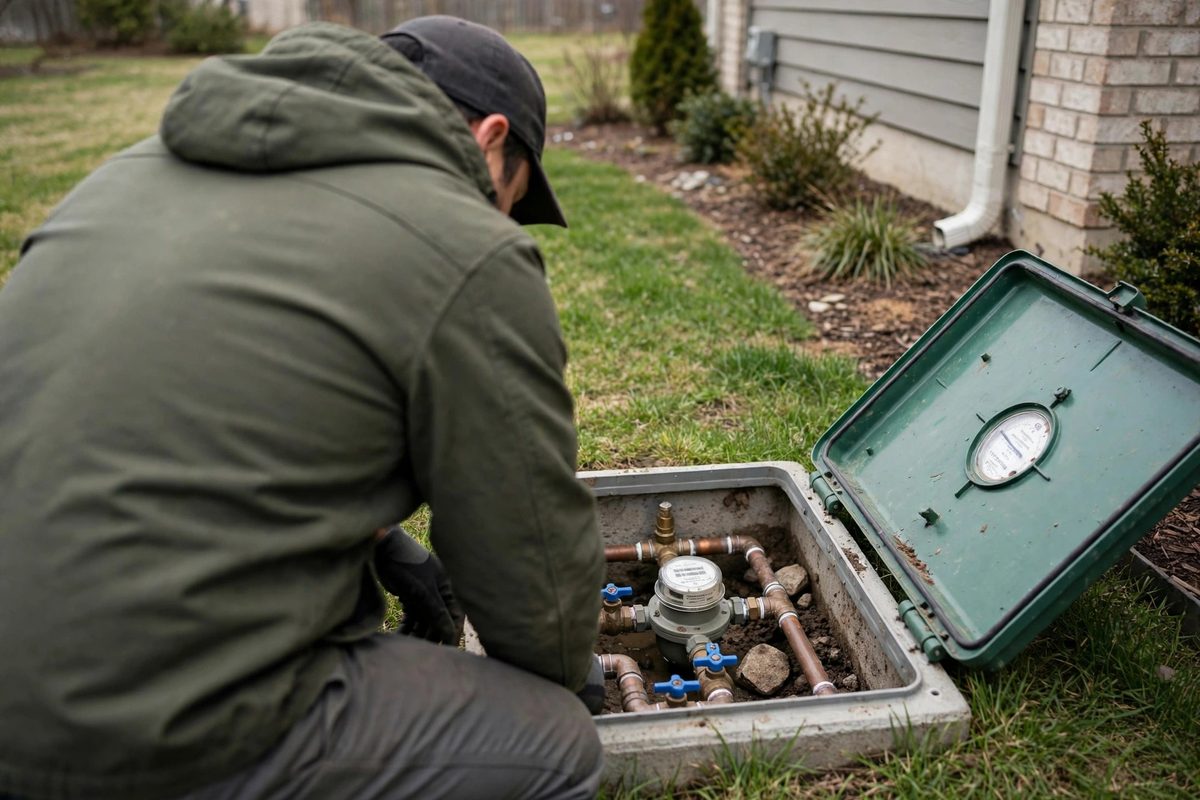
Estimated versus actual readings, in detail
An estimated bill is a guess at usage, usually based on past use for the same home, made when the meter could not be read in that period. Estimates are routine, and they are usually close, but they are not measurements. When an actual reading replaces an estimate, the bill corrects itself, and that correction can look like a spike or a drop that never happened in real use. A rise that appears on an estimated bill and reverses on the next actual bill was never a leak at all. It was arithmetic catching up.
How to tell: the bill itself usually labels each reading as estimated or actual, near the volume figure. Check both bills before comparing them, and prefer actual-to-actual comparisons. If the later bill is estimated, wait for the actual reading or run the meter test, which measures escaping water directly and does not depend on any bill estimate. If the earlier bill was estimated and the later one is actual, part of the apparent rise may simply be the correction, and the meter test is again the arbiter. Estimates explain more bill spikes than leaks do, which is why the checker asks about them before anything else.
Changes that raise volume without a leak
Volume rises for ordinary reasons, and each one should be ruled out before a leak is assumed. Extra occupants, including guests staying for weeks, raise every water use in the home. Irrigation season raises outdoor use sharply, and a new irrigation schedule can add more gallons than a small leak. A filled pool, a new appliance, a lawn-watering routine, or a change in working from home all move the daily figure. None of these is a fault, and all of them are invisible on a bill that shows only totals.
The way to separate use from escape is timing. Use changes start when the change starts, and they track it: irrigation rises with the watering schedule, guests raise use for the length of the stay. A leak, by contrast, runs regardless of schedule, including overnight and during quiet periods, which is exactly what the meter test isolates. If the rise tracks a known change, note the change and re-compare after it ends. If the rise persists through quiet periods, the meter test is the next step, and its result decides the question that the bill only raised.
From bill to visit
The path from a bill to a visit has four steps, and the checker covers the first. First, compare by volume and days, not by dollars. Second, check estimated versus actual on both bills. Third, rule out use changes that explain the rise. Fourth, run the meter test, and bring its result, with the bill figures, to the call. A visit arranged after those four steps starts with narrowing checks in the right place, instead of spending its first hour re-establishing facts the homeowner could have brought.
If the meter test shows no flow but the bill volume stays high, do not stop there. Recheck the bill figures and the day counts, confirm both readings were actual, and retest the meter over a longer window, such as overnight. A small or intermittent leak can hide through a short test while still lifting bill volume over a month. The bill and the meter test disagree only until one of them is rechecked carefully, and the recheck, whichever direction it goes, is what the visit builds on.
Where to find the figures on your bill
Three figures matter, and each has a usual place on the bill. The volume figure sits in the usage section, labelled as water usage or consumption, usually in gallons. The days covered sit with the billing period, either as a day count or as start and end dates. The estimated-or-actual label sits near the reading itself, often as a single word next to the meter reading. Those three figures, and nothing else from the bill, are what the checker needs.
Two figures should not be entered. The amount due is not usage: it mixes water charges with fees and other charges, and it moves when rates change even if usage stays flat. Sewer charges, where a bill shows them separately, are also not water volume, even though they often track it. Entering either one as volume produces a daily figure that looks precise and means nothing, so check the label on the figure before typing it in.
Some bills show volume in CCF, meaning hundred cubic feet, rather than in gallons. One cubic foot is 7.48 gallons, so one CCF is 748 gallons. If a bill shows CCF, multiply the CCF figure by 748 to get gallons before entering it, and enter the result as the volume. If the bill shows gallons, enter it as printed. A unit mistake here has the same effect as a unit mistake on the meter calculator: a confident answer that is wrong by a large factor.
Common questions about checking a water meter for a leak
Which figure on the bill do I use?
Use the water volume or usage figure, not the amount due. The amount due mixes water charges with fees and other charges, and it moves when rates change even if usage stays flat. The volume figure, usually shown in gallons, is the water actually used in the period, and it is the only figure that belongs in a usage comparison between two bills.
What if the two bills cover different numbers of days?
Enter the exact day count from each bill, and the checker divides each volume by its own day count. That per-day step is what makes periods of different lengths comparable. A 28-day bill and a 35-day bill cannot be compared by volume alone, but their gallons-per-day figures can, because each is already adjusted for the days it covers.
My bill is estimated. What does that mean for the result?
An estimated bill is a guess at usage, not a measurement, and a spike on an estimated bill can disappear when an actual reading replaces it. Treat an estimated-bill result as a prompt to check, not as proof of a leak. Compare actual readings where possible, and run the meter test, which measures escaping water directly instead of relying on any bill estimate.
Does a spike prove I have a leak?
No. A spike proves usage rose, not why it rose. Estimated readings, extra occupants, seasonal watering, and a filled pool can all raise volume without any leak. A spike is a reason to test, and the meter test is the test that separates water actually escaping from a billing or usage change. Only the meter result, and then the narrowing checks, point to a leak.